
Context & Problem
GE Renewables operates thousands of wind turbines across global sites. Daily maintenance operations at these sites were managed through paper-based plans: printed schedules, handwritten notes, and verbal handoffs between shifts. There was no centralized data layer connecting fault information, maintenance history, or workforce allocation.
The consequences were tangible: unplanned turbine climbs when components failed unexpectedly, inconsistent reporting across sites, no historical records for pattern recognition, and significant time lost to manual coordination. Every unnecessary climb costs thousands in labor, equipment, and lost energy production. Leadership needed a digital tool that could bring operational intelligence to the field.
My Role & Scope
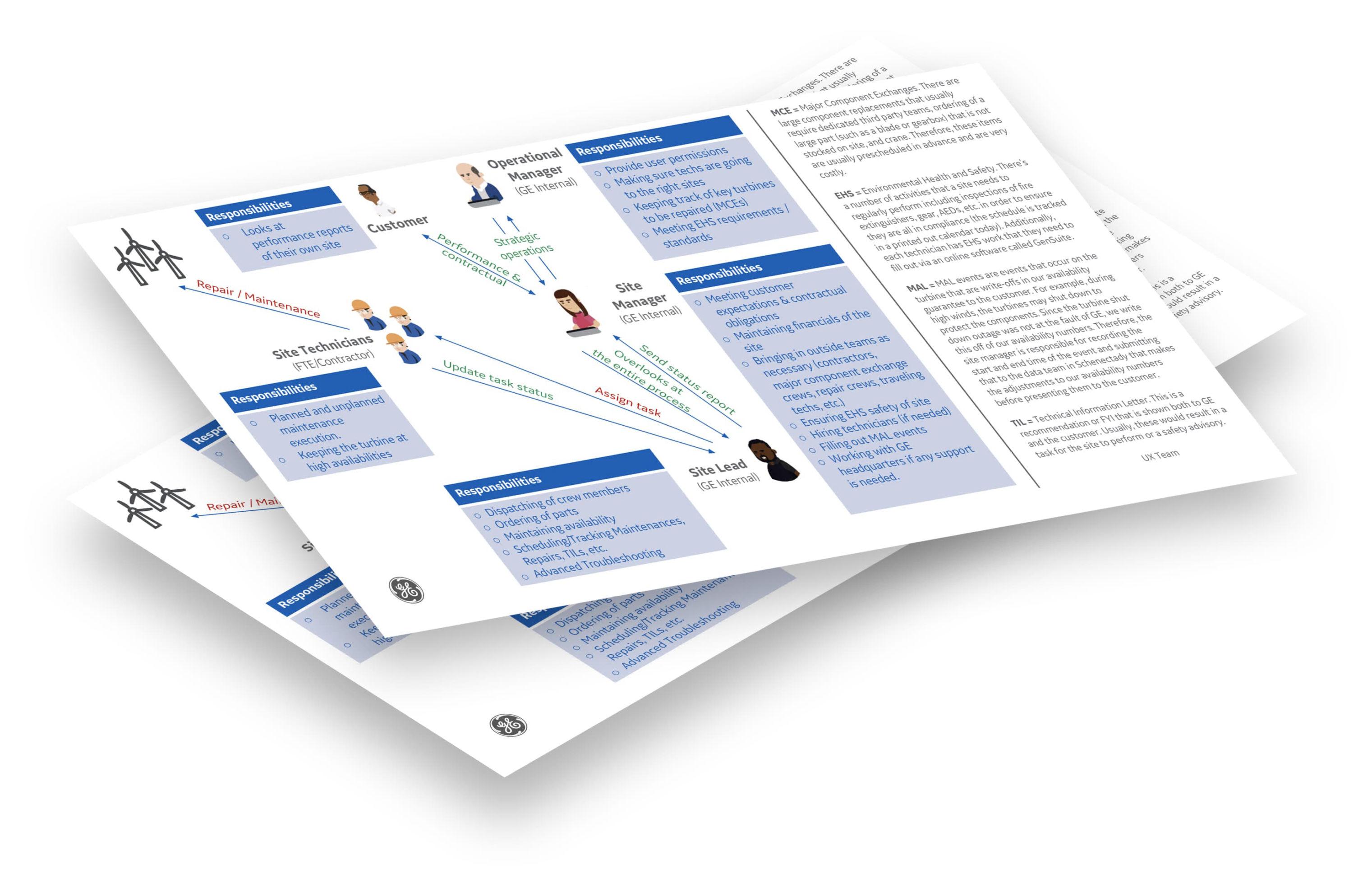
I served as the UI/UX Designer responsible for the full application experience, from field technician workflows on tablets to site manager dashboards on desktop. I worked closely with domain experts, operations managers, and GE's software engineering team to translate complex industrial processes into a usable digital tool.
Constraints & Challenges
- Field conditions: Technicians operate in harsh outdoor environments with limited connectivity. The interface had to be usable with gloves, in bright sunlight, and with intermittent network access.
- Complex domain: Wind turbine operations involve specialized terminology, regulatory requirements, and safety protocols. Understanding the domain was essential before any design decision.
- Legacy workflows: Paper-based planning was deeply ingrained. The tool had to feel like an upgrade, not an imposition, reducing friction rather than adding new steps.
- Cross-site consistency: Different sites had developed their own informal processes. dPOD needed to standardize operations without being so rigid that it broke what already worked.
Process & Key Decisions
1. Information-driven fault identification
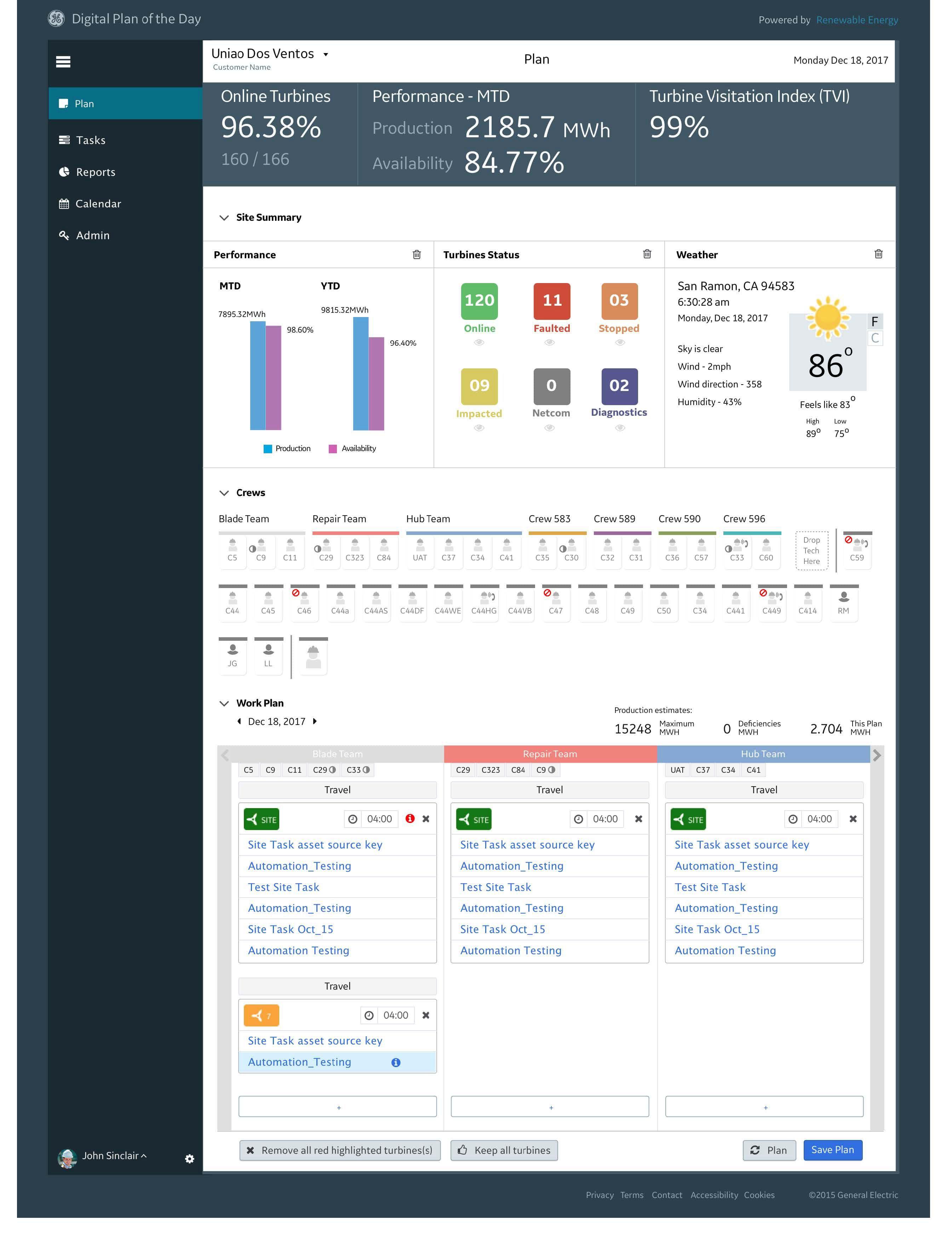
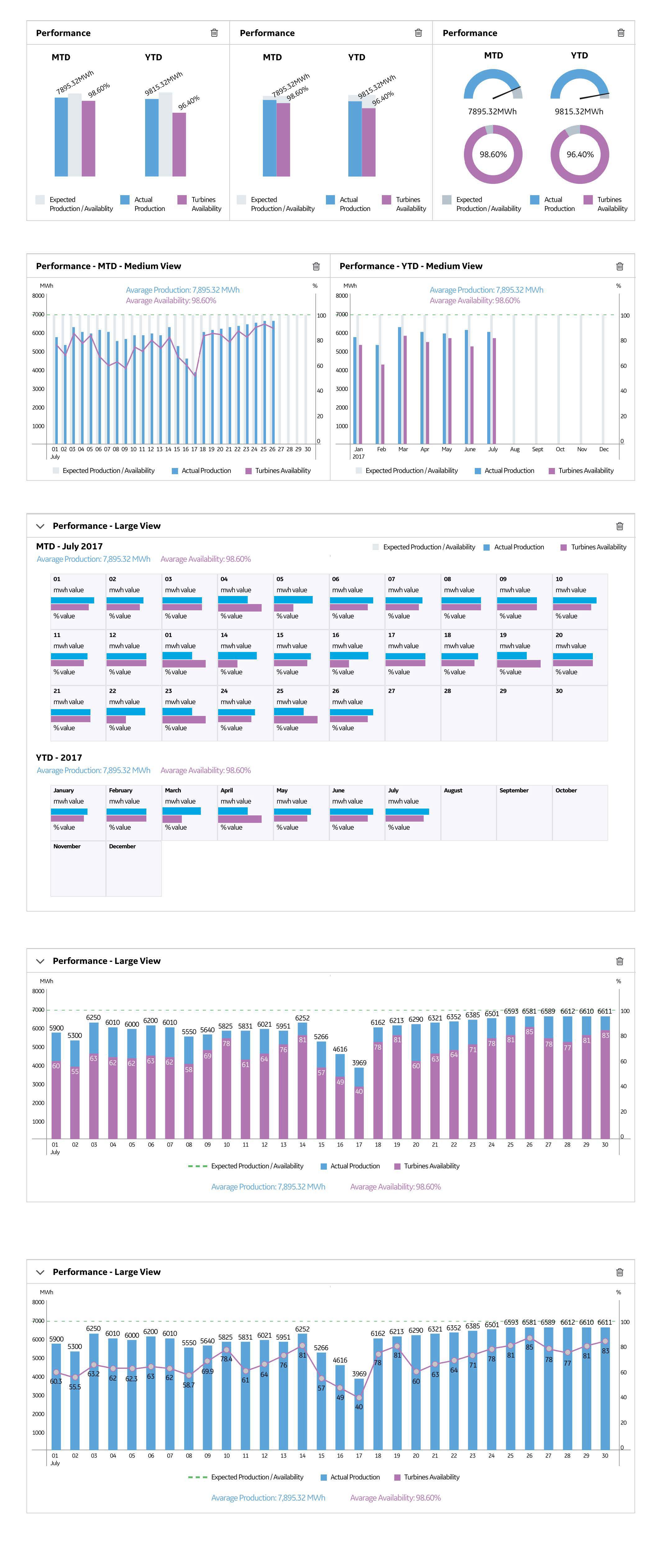
Instead of requiring technicians to manually triage faults, I designed the dashboard to surface turbine health data, fault codes, and maintenance history together, enabling teams to prioritize work based on data rather than guesswork. This directly reduced unplanned climbs by helping teams address issues before they escalated.
2. Streamlined daily operations
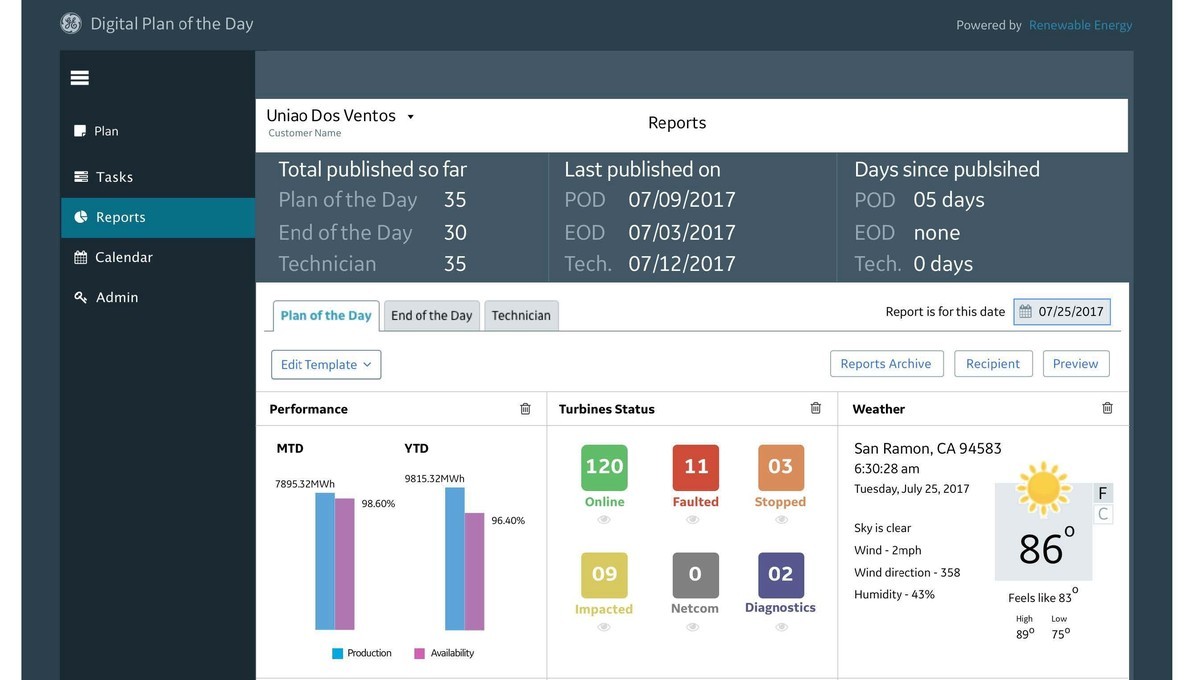
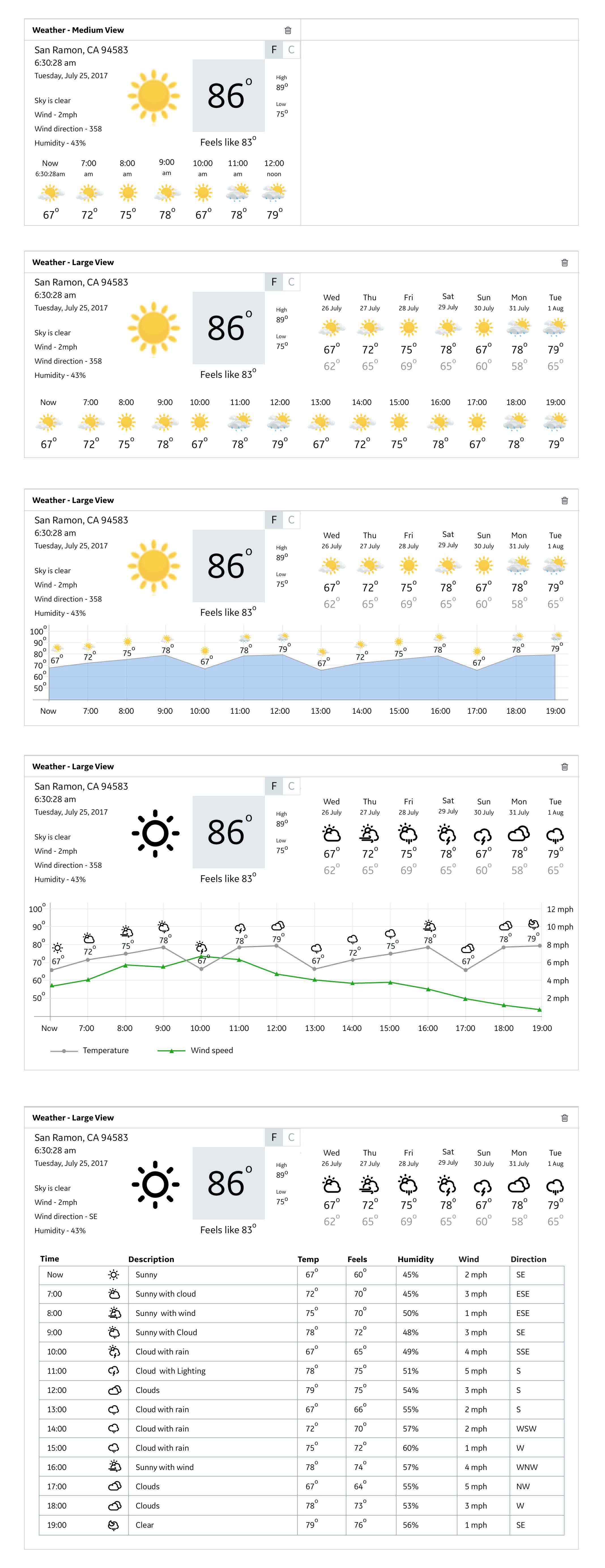
The daily plan view consolidated everything a site team needs each morning: scheduled maintenance, active faults, crew assignments, weather conditions, and safety alerts. What previously required collating information from multiple paper sources and verbal briefings became a single, scannable interface.
3. Automated standardized reporting
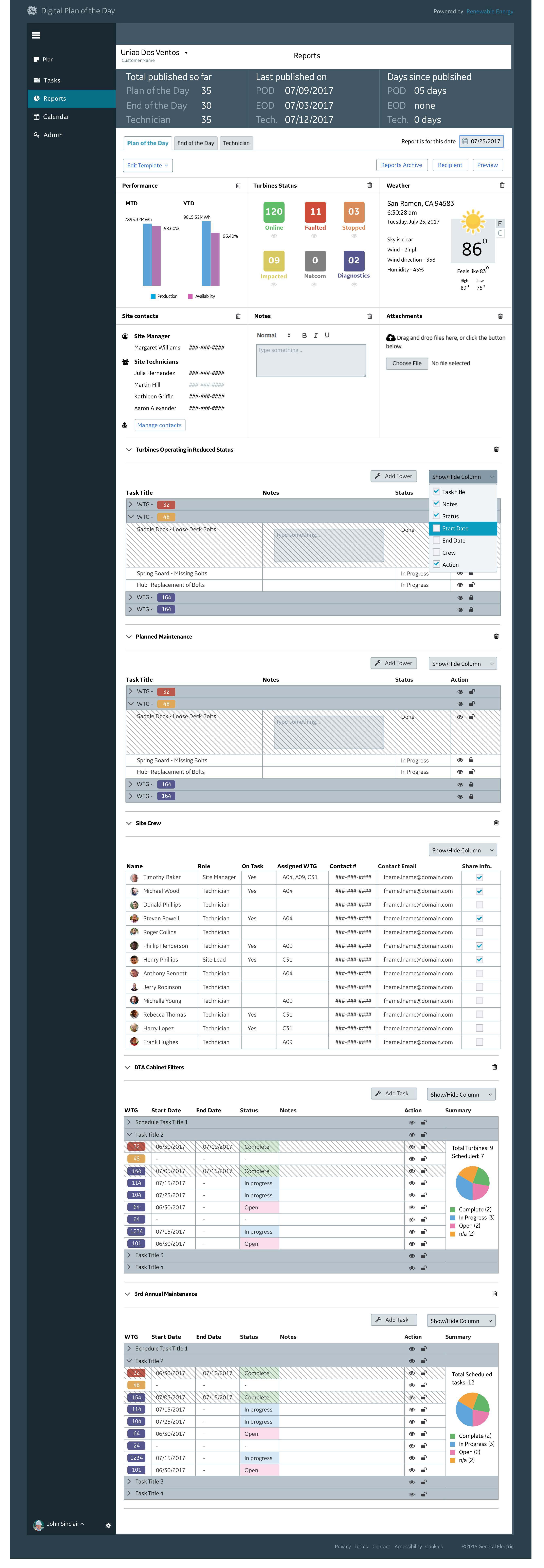
Reporting was one of the highest-friction tasks in the old workflow. I designed structured input flows that captured the right data during task execution, then automatically generated standardized reports. This eliminated end-of-day paperwork and ensured consistent reporting quality across all sites.
4. Historical maintenance records
Every completed task, fault resolution, and inspection feeds into a searchable historical record. I designed the data model and interface to let managers identify recurring issues, track component lifecycles, and make evidence-based decisions about parts replacement and resource allocation.
5. Designing for the field
The tablet experience was designed for real field conditions: large touch targets, high-contrast visuals, minimal text input, and offline-capable task flows. I conducted contextual research at wind farm sites to understand how technicians actually interact with devices during their work day.
What Changed
Reduced unplanned turbine climbs through proactive, data-driven fault identification and maintenance planning
Paper forms required for daily planning. Fully digital workflow from morning briefing to end-of-day reporting
Turbine availability improved as preventive maintenance replaced reactive responses to component failures
Standardized operations platform deployed across sites, replacing inconsistent local processes
Outcome & Impact
dPOD transformed how wind farm sites plan and execute daily operations:
- Maintenance costs decreased: by shifting from reactive to information-driven maintenance, sites reduced costly emergency responses and unplanned turbine climbs.
- Reporting consistency improved across sites: automated, structured reports replaced manual, freeform documentation, giving regional managers reliable data for cross-site analysis.
- Operational knowledge was preserved: historical records meant that institutional knowledge was no longer locked in individual technicians' heads or lost with paper files.
- Onboarding new site staff accelerated: standardized workflows and clear task interfaces reduced the learning curve for technicians joining new sites.
Selected Screens
Lessons Learned
Design for the environment, not the office
Spending time on actual wind farm sites fundamentally changed my design decisions. What works in a design review room often fails in a muddy field with gloves on. Contextual research was not optional; it was the foundation.
Digitize the outcome, not the paper
The goal was never to create a digital version of the paper form. It was to rethink what daily planning could be when data flows freely. The best features in dPOD have no paper equivalent.
Standardization works when it reduces effort
Sites adopted standardized workflows because they were genuinely easier than the ad-hoc alternatives. Consistency was a byproduct of better design, not a mandate imposed from above.