Context & Problem
AT&T retail stores operated with multiple disconnected systems for line management, sales processing, and technical support. Associates had to switch between tools mid-interaction, leading to longer wait times and a fragmented customer experience. There was no unified application that brought these critical workflows together on a single device.
The lack of a cohesive tool meant higher training costs, inconsistent service quality across locations, and missed opportunities to streamline the in-store journey from the moment a customer walked in to the point of transaction.
My Role & Scope
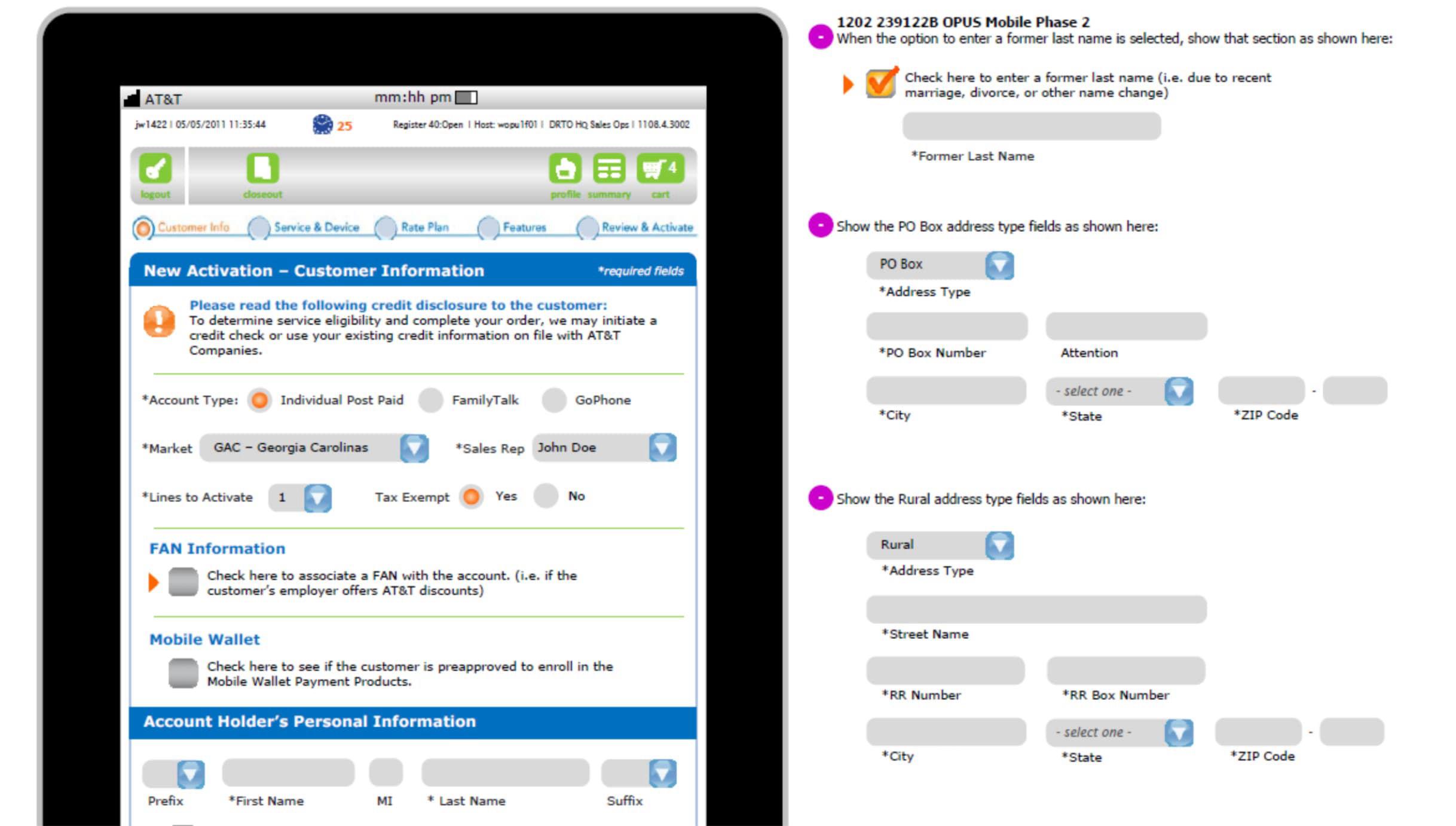
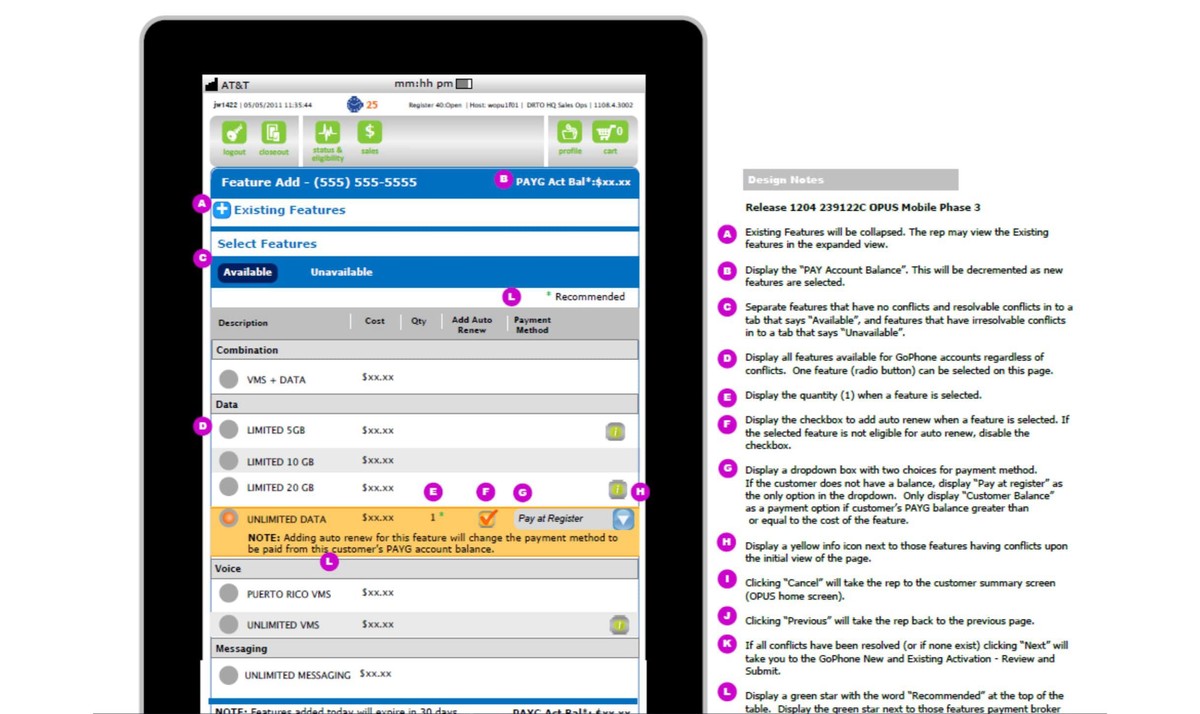
I served as the UI/UX Designer on this project, responsible for designing the mobile application interface end to end. My deliverables included detailed screen designs with comprehensive design annotations that guided the development team through interaction patterns, spacing, component behavior, and edge cases.
Approach
1. Understanding the retail floor
The design process started with understanding how associates actually worked in stores: the pace, the interruptions, the multitasking. Every design decision was filtered through the reality that this tool would be used while standing, mid-conversation with a customer, often under time pressure.
2. Unified task architecture
Rather than stitching separate tools together, I designed a single task-oriented interface where line management, sales, and tech support shared a common navigation model. Associates could move between functions without context-switching or losing their place in a workflow.
3. Annotation-driven handoff
Every screen was delivered with detailed design annotations specifying component behavior, tap targets, state transitions, error handling, and accessibility considerations. This reduced ambiguity during development and minimized back-and-forth between design and engineering.
Outcome
The OPUS Mobile application gave AT&T retail associates a single, unified tool for managing the in-store experience. By consolidating line management, point-of-sale, and technical support into one interface, the design reduced the number of systems associates needed to learn and operate. The annotation-driven approach ensured a smooth design-to-development handoff and a consistent implementation across the retail network.
Selected Screens