Context & Problem
Dermatologist access in the United States is a significant healthcare challenge. Long wait times, limited specialist availability in rural areas, and aging baby boomers facing increasing skin conditions created a growing demand that traditional in-person visits could not meet. Static healthcare websites offered information but lacked the interactivity and direct physician connectivity patients needed.
Working alongside Dr. Indy Chabra and a development team, the goal was to build a mobile application that shifted the paradigm, from passive information delivery to an interactive, algorithmic tool that could triage patient needs and connect them directly with dermatologists. The collaboration with Dr. Chabra was a direct clinical partnership where the domain expert guided the medical accuracy while I translated clinical requirements into intuitive patient-facing interfaces.
My Role & Scope
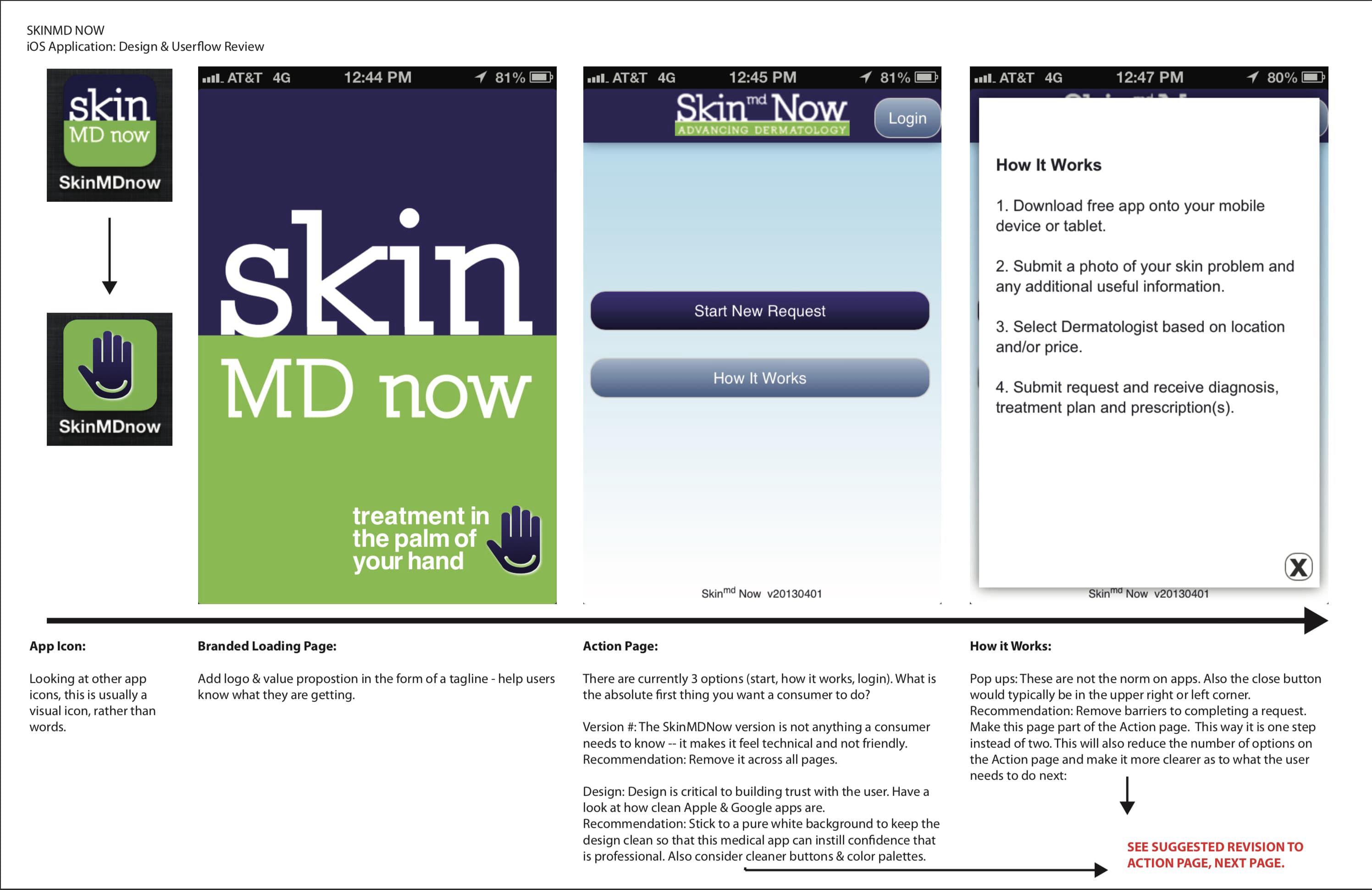
I served as the UI/UX Designer, responsible for designing the complete user interface and delivering detailed design annotations. My focus was on creating an experience that felt approachable for patients of all ages and technical abilities, while supporting the clinical workflow required for accurate triage and physician response.
Solution Approach
1. Teledermatology: simple, fast, cost-effective
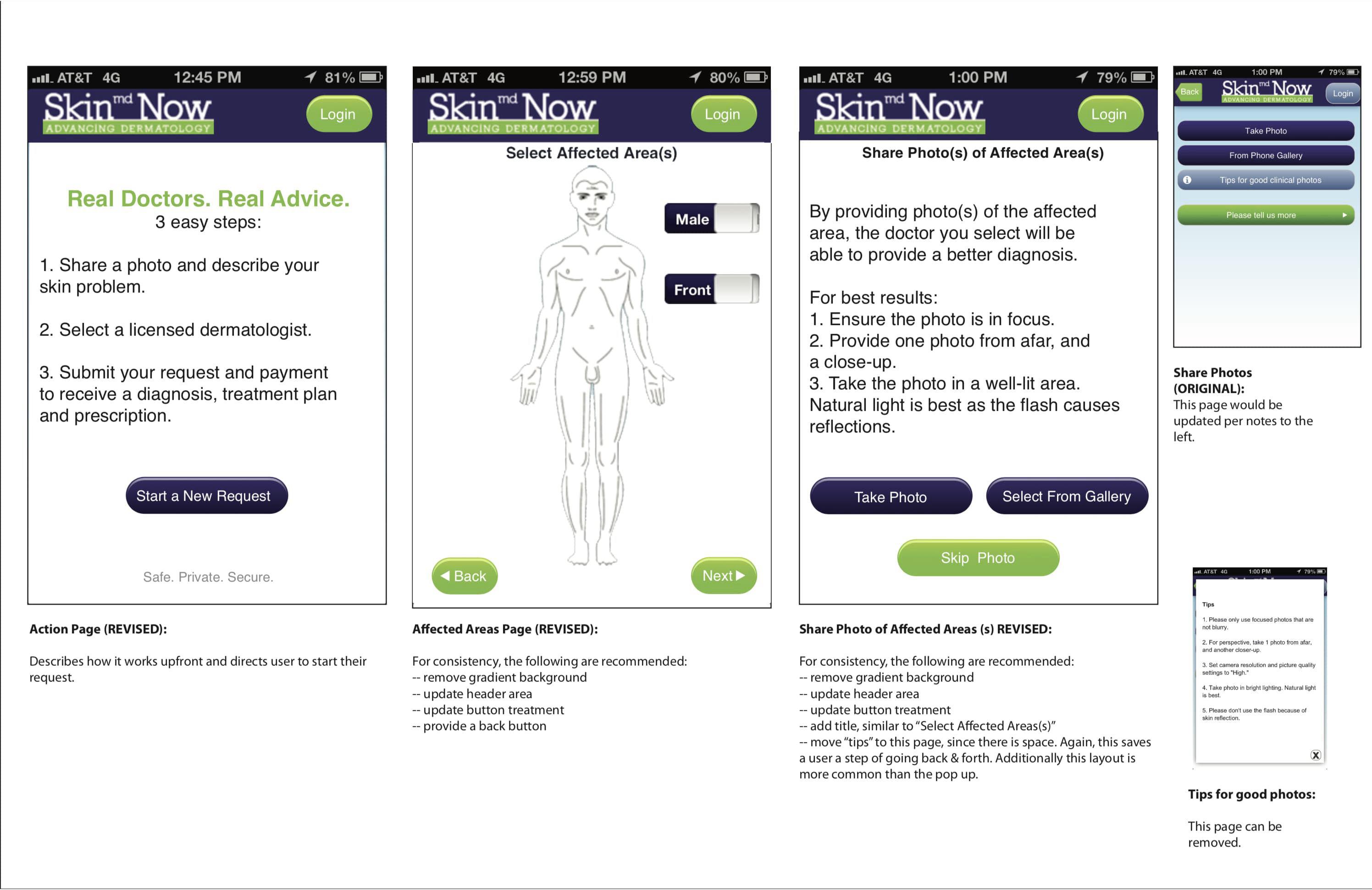
The core premise was removing barriers to specialist care. The interface was designed so patients could describe symptoms, capture images, and submit a consultation request in minutes, with no scheduling, no travel, no waiting rooms. The design prioritized clarity at every step so users felt confident they were providing the right information.
2. Point of need: information with least searching
Rather than burying educational content in deep navigation, the app surfaced relevant information contextually. As patients moved through the triage flow, they received condition-specific guidance that helped them understand their situation without requiring separate research.
3. Interactive connection to physicians
The algorithmic triage system categorized patient submissions by urgency and condition type, routing them to appropriate dermatologists. The interface gave physicians a structured view of patient data, including images, symptom history, and triage assessment, enabling faster, more informed responses.
4. Cross-platform responsive design
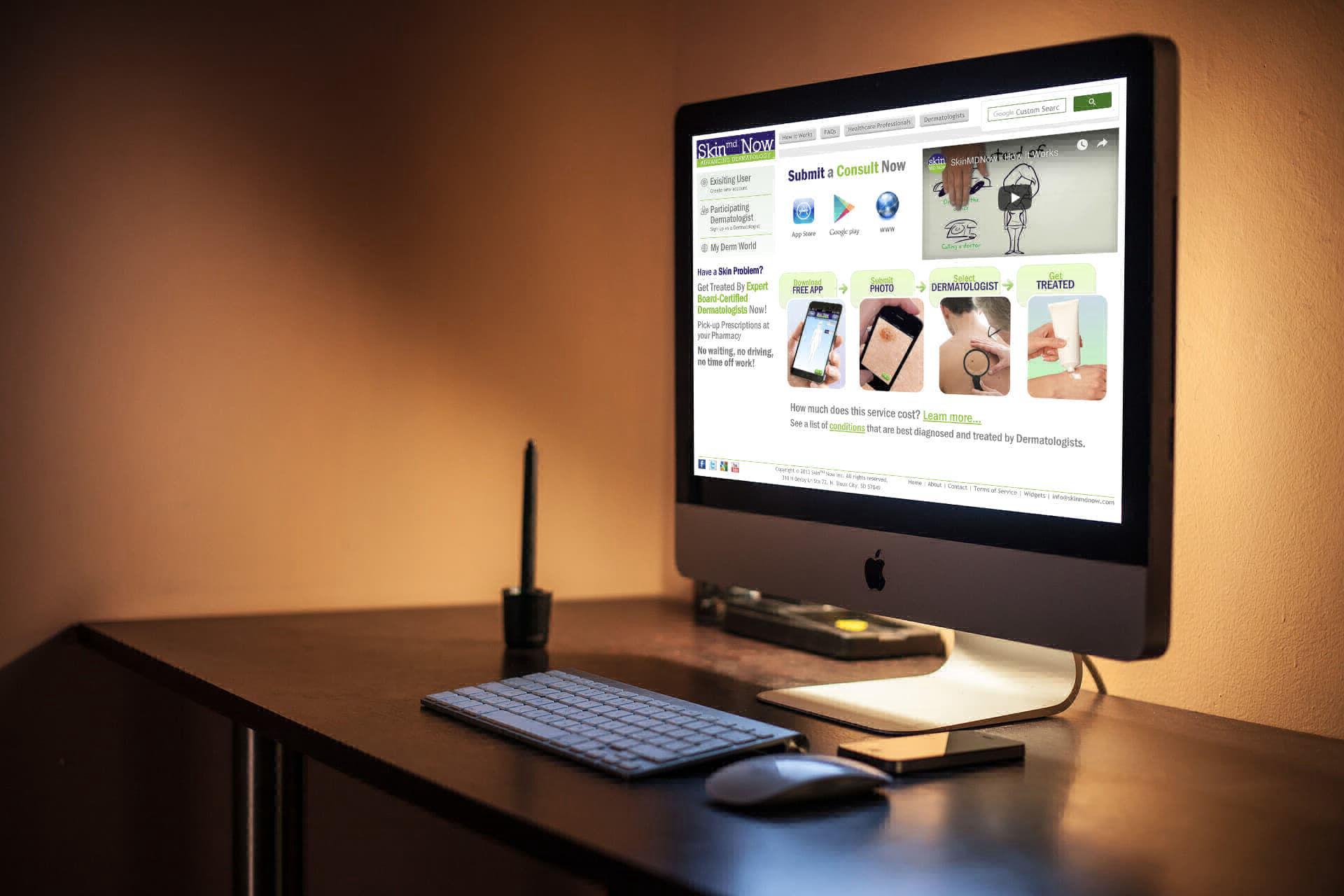
The app wasn't limited to mobile. I designed responsive interfaces for desktop and iPad as well, ensuring the consultation flow, physician dashboard, and educational content adapted seamlessly across screen sizes. The desktop version provided physicians with a more spacious workspace for reviewing patient submissions, while the tablet version served as a portable clinical tool during in-person follow-ups.
What Changed
A guided mobile triage flow replaced static symptom checklists, letting patients describe conditions and submit images in minutes
A responsive physician dashboard gave dermatologists structured patient data across desktop, tablet, and mobile for faster clinical review
Contextual educational content surfaced condition-specific guidance during the triage flow, reducing patient anxiety and improving submission quality
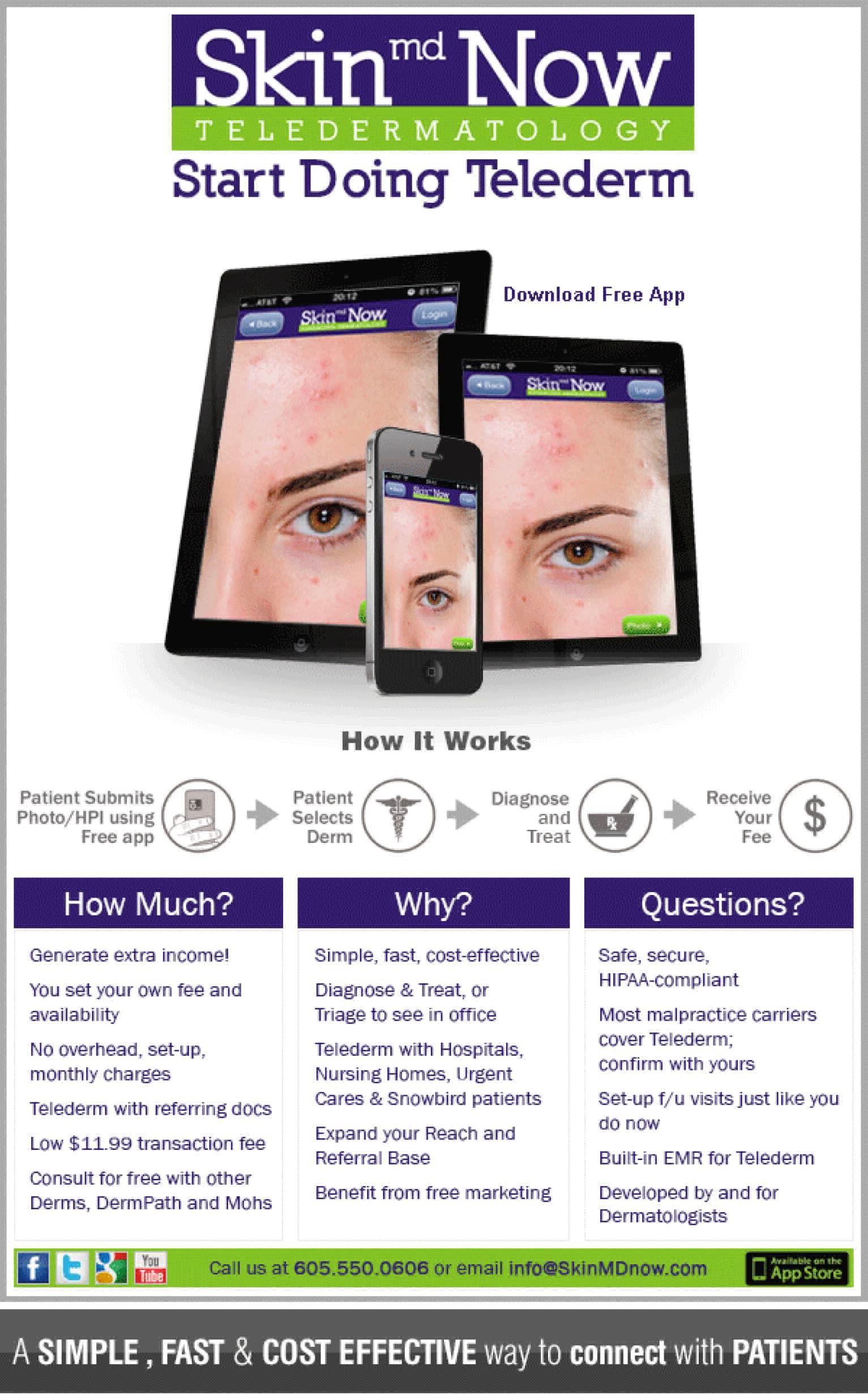
A promotional brochure extended the brand identity from digital product into print marketing collateral
Outcome
Skinmd Now delivered on its promise of making dermatology accessible at the point of need. The app provided patients with a clear, guided path from symptom identification to physician consultation. By designing an interface that was both clinically sound and patient-friendly, the project demonstrated that mobile applications could meaningfully close the gap in specialist healthcare access.
Selected Screens